



A good few months ago, I took part in a persona dolls training course specifically for childminders.
This was something I had wanted to do for a long time. I was even the person that got the ball rolling with the training company to open slots for childminders, and making it accessible for the settings as previously persona dolls were intended for school based settings. They company were so enthusiastic about this that they managed to source funding so that the childminders taking part got a doll included in the cost of their course, when usually these are an (expensive) addition.
So why has it taken me so long to introduce my doll to my setting? Writing is supposed to help us reflect, so maybe we will find out together about the roots of my apprehension.
For those who do not know about them, persona dolls are large dolls that are a tool used by educators to encourage inclusion and cover important social topics such as challenging discrimination. Children are encouraged to create a bond with the doll, so they are treated like a real person who visits the setting in order to develop empathy for the character. This empathy is used later on to help the doll to solve occasional problems they encounter as the children give suggestions and guidance to the doll. Overall the dolls help to empower children to be active members of their communities by realising they and others have voices, and that they can make a difference through being caring citizens. This all sounds great right?
With these kinds of tools however, it is important that educators are not pushing stereotypes and misinformation. If you choose a doll to reflect an ethnic background different to your own, you should try and engage with people from that background as well as researching carefully before you include this in the doll’s stories.
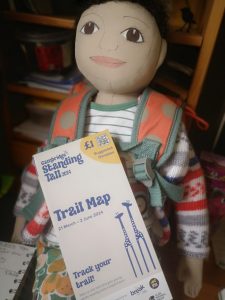
The doll I have chosen is of mixed heritage, and I have specifically chosen the character to be of Nigerian descent. I have several friends who I can discuss topics with relating to this background so I can remain as factually correct as possible. (The first conversation I had was with a friend to discuss the suitability of the hair styles of the black dolls). I have also chosen for the doll to be gender neutral as a way for me to improve my own skills around using pronouns, in addition to normalising vocabulary for the children as it is becoming more common in society; we are heading away from the binary. My first task therefore was to find a suitable name and after lots of thought I have chosen Ayo. The story of Ayo also relates to their family with their ‘Daddy’ not being able to read. There will be hints of this through the stories Ayo tells, but may never be stated explicitly. It will tell the tales of how they find ways to work around challenges that may be faced through not being able to read. I am sure the stories will develop greatly over the weeks and years that Ayo visits our home setting.
So why have I found it so difficult to get started? Teaching empathy skills and challenging negative stereotypes are all things I face every day in my role, these skills are not new to me. Storytelling is a daily occurrence so I don’t feel it is a lack of my own personal skills that has made me nervous. Maybe it is the lack of right and wrong rules of using the dolls? There is no step by step guide or planning sheet; the character is built solely by the adult using them. Certainly it is clear that pre-planning needs to happen, which in my more recent practice of in the moment planning feels strange. School settings are likely to still have the traditional termly planning so I can see how a persona doll can weave into topics seamlessly, I therefore need to think carefully about how I structure the planning for Ayo. I also feel a very heavy responsibility for teaching about other people correctly. I am immensely aware of the influence I hold over young minds and their opinions of others, and taking that first step into introducing Ayo was a feeling of concern that I might cause more issues than I help to solve. However I think this was not the case after all.
Ayo was greatly received by the children and they seem eager for Ayo to visit again. I chose to stick with a simple story of Ayo visiting the shop, something very relatable for the children and we will have a few more stories like this before they encounter any problem situations. I hope by this point my confidence in using this new tool will have grown. However I think it is maybe a good thing that I have shown caution, it means I am always going to think about the impact of the stories I create and means I will ensure I seek to empower the voices of my friends and community by checking my work with them in trickier storylines.
Find out more about persona dolls : https://personadoll.uk/